
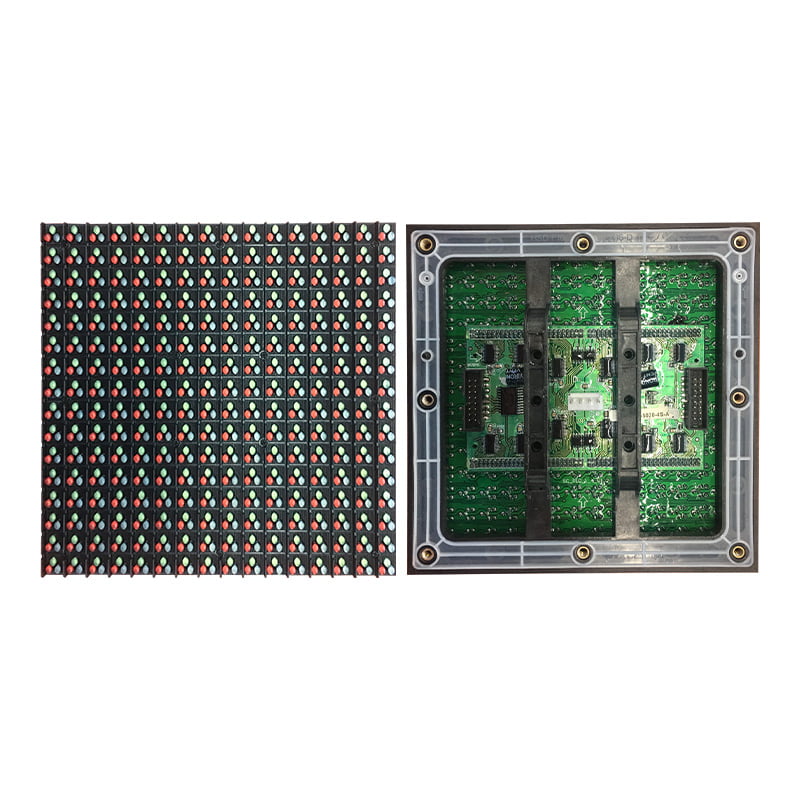
 A high-density LED video wall — the foundation of modern professional displays.
As deep participants in the LED display manufacturing industry, we engage in technical negotiations with global integrators, project managers, and end users every single day. In the 2026 procurement landscape, a harsh reality stands out: more than 40% of LED display projects have their return-on-investment (ROI) doomed at the tender stage itself. The root cause is not insufficient budget, but rather that buyers fall into the linear-parameter trap of "smaller pitch is always better" and "higher resolution is always better" — completely ignoring optical spatial geometry, the yield rates of underlying packaging technologies, time-budget allocation of driver ICs, and the increasingly stringent global ESG (Environmental, Social, and Governance) energy-efficiency compliance walls.
LED display selection has long surpassed the scope of mere hardware procurement. It has evolved into system-level planning that involves visual ergonomics, thermodynamic management, supply chain engineering constraints, and capital-expenditure efficiency. This guide will thoroughly deconstruct the core logic of 2026 LED display technology — stripping away marketing fiction and providing a professional, quantifiable decision matrix from the source of the industrial chain.
If you are ready to begin your project evaluation, browse our full LED product line here for technical baseline references.
Chapter 1: Deconstructing Pixel Pitch and the Scientific Model of Spatial Vision
Pixel pitch (commonly abbreviated as "P", e.g. P1.5) refers to the absolute physical distance, measured in millimeters (mm), between the center points of two adjacent LED light-emitting pixels. It fundamentally determines the screen's pixel density, which in turn determines the maximum achievable resolution within a fixed physical area. The smaller the pitch, the denser the pixel array — and the smoother the physical edge of the image becomes.
However, manufacturing ultra-fine pitch displays is not without cost. Pushing from P2.5 down to P1.2 causes the number of LED chips required within the same physical area to explode exponentially. This directly leads to a sharp rise in routing complexity, an increase in PCB layer count, and a cliff-edge collapse in SMT yield — ultimately reflected as an exponential surge in procurement cost. More critically, pixel density that exceeds the limit of human visual acuity adds no visible image quality whatsoever — it merely inflates power consumption and heat output.
1.1 Industrial-Grade Mathematical Models for Calculating Viewing Distance
When determining pixel pitch, the optical concept of Visual Acuity must be introduced. It is the core yardstick for preventing both over-specification and under-specification. In 2026 engineering practice, the industry follows three progressive calculation models:
-
The 10× Rule of Thumb: Widely used for rapid on-site evaluation. Formula: Pixel Pitch (mm) × 10 = Approximate Viewing Distance (feet). For example, a P1.5mm display has an approximate optimal viewing distance of 15 feet (≈4.5 m).
-
Retina Distance (Visual Acuity Distance): Derived from the angular resolution of the human eye (commonly set at 1 arc-minute), this calculates the distance at which a 20/20-vision observer can no longer distinguish individual pixels and instead perceives a continuous seamless image. Formula: Pixel Pitch (mm) × 3438 = Retina Distance (mm).
-
Average Comfortable Viewing Distance: A subjective adjustment that synthesizes content resolution, dynamic contrast ratio, and long-term viewing fatigue. Generally somewhat shorter than the retina distance.
| Pixel Pitch | Theoretical Retina Distance (m) | Average Comfortable Distance (m) | 2026 Core Commercial Applications |
|---|---|---|---|
| P0.75 – P0.9 | 2.58 – 3.09 | 1.29 – 1.55 | Military/broadcast-grade close-range monitoring, high-end interactive digital sand tables, near-eye design workstations |
| P1.25 – P1.5 | 4.30 – 5.16 | 2.15 – 2.58 | Executive boardrooms, high-fidelity medical imaging analysis, immersive xR studios |
| P1.8 – P2.0 | 6.18 – 6.88 | 3.09 – 3.44 | Large corporate lobbies and showrooms, premium retail storefronts, indoor main-stage events |
| P2.5 – P3.0 | 8.60 – 10.31 | 4.30 – 5.16 | Mid-sized indoor retail signage, transportation-hub Flight Information Display Systems (FIDS) |
| P4.0 – P5.0 | 13.75 – 17.19 | 6.88 – 8.60 | Large suspended displays in shopping malls, airport-hall overhead digital signage |
| P6.0 – P10.0 | 20.6 – 34.38 | 10.3 – 17.19 | Stadium perimeter displays, highway DOOH (Digital Out-Of-Home advertising) |
To compare specific configurations side-by-side, refer to our pixel-pitch product matrix.
1.2 The AVIXA DISCAS Standard: Screen Engineering Based on Content Hierarchy
In professional audio-visual system integration, deriving viewing distance from pitch alone is not rigorous. The AVIXA DISCAS standard (Display Image Size for 2D Content in Audiovisual Systems) provides a more multidimensional reference framework — one that is widely adopted in legal contracts for 2026 spatial planning.
DISCAS creatively binds screen physical dimensions, viewing distance, and content information density together. When planning procurement, two core decision modes must be distinguished:
-
Basic Decision Making (BDM): Applicable to general content (video streams, large PPT graphics, low-density text). DISCAS stipulates that under this mode, the farthest viewer's distance must not exceed 6× the image height of the screen.
-
Analytical Decision Making (ADM): Applicable to extremely detailed content (dense Excel financial tables, CAD engineering drawings, precision medical scans). Because observers must distinguish minute pixel differences, DISCAS strictly stipulates that the farthest viewer's distance must not exceed 4× the image height.
From a manufacturer's perspective: if your conference room is 20 ft (240 in) deep and is primarily used for CAD-drawing reviews (ADM mode), you require a screen with an image height of at least 60 inches (240 ÷ 4), and that screen's pixel pitch must fall in the P1.2 – P1.5 range. Only this combination simultaneously satisfies the physical-dimension requirement and supplies the total pixel count (e.g., 4K resolution) needed so that the back-row observer never misses an engineering detail due to pixel graininess.
Chapter 2: Inside the Supply Chain — SMD vs. COB vs. GOB Packaging Battle

Once pitch-vs-space relationships are established, procurement decisions must drill into the physical manufacturing layer. Entering 2026, the LED manufacturing chain has split into three mainstream packaging architectures. The choice directly determines a screen's ruggedness, thermal-dissipation capability, contrast performance, and Total Cost of Ownership (TCO) across its lifecycle.
2.1 SMD (Surface Mounted Device): Reshaping the Classic Industrial Limit
SMD is the absolute cornerstone of the LED industry over the past decade. Its manufacturing logic: LED chips are first packaged into independent brackets to form "lamp beads", which are then soldered onto PCB circuit boards by SMT (Surface-Mount Technology) machines.
Core Advantages and Market Position: Backed by a highly mature global supply chain and fully automated production lines, SMD retains unmatched cost efficiency in 2026. The SMD structure delivers excellent color uniformity at the photometric level and supports the highest brightness output — some outdoor SMD displays easily exceed 8,000 nits. For maintenance teams, SMD's "single-lamp repair" characteristic translates into extremely low spare-parts cost: an engineer can replace a dead lamp with tweezers and a hot-air gun within minutes.
Physical Bottleneck: SMD's Achilles' heel is the miniaturization limit. Once pitch drops below P1.2, the solder-pad area on the PCB shrinks to the micrometer scale. At this scale, solder-paste printing precision and reflow-oven temperature-field control become extraordinarily difficult — production yields plummet. Additionally, because each lamp protrudes above the PCB as an independent "island", SMD is highly vulnerable to "knock-off" incidents during shipping or in crowd-dense venues.
2.2 COB (Chip on Board): The Microscale Champion of the Future
COB represents a complete reconstruction of the underlying architecture. Manufacturers eliminate the lamp-packaging stage entirely, instead bonding bare LED chips directly onto the PCB substrate and covering the surface with a single layer of epoxy resin for sealing.
A Dimensional Downgrade in Optics and Thermal Dynamics: COB fundamentally resolves the physical pain points of micro-pitch. Without independent leads or brackets, COB easily achieves pitches as fine as P0.9 or smaller. Its thermal performance is especially outstanding: chips sit directly on the PCB, allowing heat to dissipate rapidly through massive copper-plating layers, dramatically reducing chip junction temperature and enabling true 24/7 operation without thermal failure.
Visually, the surface resin layer transforms what would otherwise be glaring "point sources" into soft "surface sources", completely eliminating screen-induced glare — critical for command-and-control centers and high-end studios where viewers must stare at screens for hours. Meanwhile, the deep-black resin substrate gives COB extraordinary contrast ratios, typically reaching 20,000:1 — depths of black that traditional SMD simply cannot reach.
For premium near-distance applications, our COB display series is engineered around this glare-free, high-contrast standard.
Commercial Compromises and Hidden Costs: In 2026, COB still carries a 10–20% initial-purchase premium over equivalent-spec SMD. More frustrating for maintenance staff: because all chips are sealed into a single resin mass, COB screens are nearly impossible to repair at pixel level on site. A dead pixel typically requires replacing an entire module and shipping it back to the factory for laser-equipment rework. Procurement contracts must therefore demand a higher percentage of factory-original same-batch spare modules.
2.3 GOB (Glue on Board): The Pragmatic Compromise for Physical Protection
GOB is not a chip-level architectural revolution — it is a "protective patch" layered onto mature SMD production lines. The process: after standard SMD SMT and aging tests, a custom transparent polymer gel is poured across the module surface, filling all gaps between lamps and just topping the lamp surface.
Ultimate Mechanical Armor: Once cured, GOB gel transforms the fragile lamp array into an indestructible monolithic plane. Screens gain enormous shock and vibration resistance, virtually eliminating lamp-loss incidents from transport, frequent installation, or external impact. This makes GOB shine in the staging/rental market — where rigs are torn down and rebuilt constantly — and in interactive floor tiles and low-level mall ad displays prone to pedestrian contact.
Optical and Thermal Costs: Everything has a price. The thick GOB layer inevitably introduces optical refraction, slightly compromising extreme-angle color consistency relative to bare-board SMD. The gel layer also absorbs some luminous flux, causing mild brightness attenuation. Thermally, the gel acts as a partial insulator: if used in long-term sun-exposed high-power outdoor environments, dissipation efficiency lags behind both bare SMD and bottom-conducting COB.
Manufacturing-side Summary: If your project has sufficient budget and demands ultimate close-range image quality with seamless black levels — choose COB without hesitation. If you are deploying thousands of square meters of large outdoor or atrium projects with high price sensitivity — mature SMD remains king. If you are in the rental industry, or your screen is in a corridor where people may touch it — GOB's physical-impact resistance is the optimal way to protect your investment.
Chapter 3: Breaking Out of the Spec War — The Hidden Dance of Driver ICs, Refresh Rate, and Grayscale

Many buyers, when reviewing a vendor's BOM (Bill of Materials), fixate on the brand of the LED light-emitting chip — completely overlooking the "brain" hidden behind the PCB: the driver IC (Integrated Circuit). By 2026, judging whether a screen is "professional-grade" has shifted entirely from spatial resolution (pixel pitch) to temporal resolution (refresh rate) and color depth (grayscale processing).
3.1 Refresh Rate: The Arms Race from 3,840 Hz to 15,360 Hz
Refresh rate defines how many times per second the display hardware redraws the image. Conventional commercial displays once anchored at 1,920 Hz, but in today's ecosystem fusing high-speed photography, broadcast, and virtual production, 3,840 Hz has been established as the non-negotiable entry baseline.
The physical value of high refresh rates manifests across two dimensions:
-
Camera Compatibility: When broadcast-grade cameras with high-speed shutters point at LED screens, low refresh rates cause fatal scan lines, flicker, and moiré artifacts. For xR (Extended Reality) and ICVFX (In-Camera Visual Effects) applications, which routinely operate with ultra-high frame rates (120 fps / 240 fps) and motion-capture systems, top-tier driver chips (such as flagship dual-latch architectures from Macroblock or Chipone) have pushed refresh rates to 7,680 Hz — even an astonishing 15,360 Hz.
-
Human Visual Smoothness: Although the human eye cannot directly capture high-frequency scan lines the way a camera does, prolonged exposure to low-refresh screens triggers subconscious "micro-flicker" perception, causing severe visual fatigue and dizziness.
3.2 The PWM Time-Budget Paradox: A Life-and-Death Battle Between High Refresh and High Grayscale
When discussing driver control, we must expose the most technically nuanced battle in the LED industry: the time-allocation paradox of PWM (Pulse Width Modulation).
LED displays do not modulate brightness levels by varying current. Instead, PWM rapidly toggles the LED on/off at extremely short intervals, with the on/off duty cycle determining perceived brightness. Thanks to the human eye's persistence of vision, the brain blends these pulses into different brightness gradations — and that is how grayscale is born.
Here the physical dilemma surfaces: the higher the refresh rate, the shorter the time window available for PWM to slice up. Concrete data:
- At 1,920 Hz, each frame lasts ≈520 microseconds.
- At 3,840 Hz, frame time is halved to ≈260 µs.
- At 7,680 Hz, frame time crashes to just ≈130 µs.
To achieve high-end requirements of 16-bit (65,536 levels) or even 18-bit (262,144 levels) grayscale within only 130 µs, PWM must slice this micro-window into tens of thousands of sub-clock cycles. If a supplier ships low-end, low-clock-speed driver ICs, their processing power simply cannot complete high-precision pulse partitioning in such a short time.
Catastrophic Visual Consequence — Low-Gray Collapse: When a low-end IC faces the dual pressure of high refresh and high grayscale, it typically discards low-brightness details. Screens then exhibit obvious "banding", noise, or jarring color jumps in dark scenes, shadows, or gradual fades.
For this reason, as a professional buyer, do not be hypnotized by isolated specs such as "3,840 Hz" or "16-bit" printed in large fonts on a datasheet. Tender documents must mandate "low-brightness high-grayscale" test reports and explicitly state core driver IC model numbers — ensuring that when the system is dimmed to 20% or even 10% overall brightness, it still maintains complete 16-bit smooth grayscale output.
Chapter 4: Vertical Procurement Empowerment Guide Across Seven Core Industries
Parameter discussions detached from concrete application scenarios are meaningless. By 2026, LED manufacturers have evolved highly specialized product lines for distinct verticals. Below are deep selection and pitfall-avoidance strategies tailored for seven target audiences.
4.1 Advertising & Media
Commercial Demand: Maximum visual exposure across DOOH networks combined with extreme operational ROI.
Selection Strategy:
- Outdoor High Brightness and Anti-Aging: Large outdoor screens endure harsh direct sunlight. Recommend SMD-packaged screens at P6.0–P10.0. Brightness must lock in the 6,000–8,000 nit range.
- High-Brightness PWM Dimming Compensation: If full-load operation under intense sun is required, light decay accelerates rapidly. Use control systems with adaptive brightness sensors, and driver ICs with full-load current compensation under high-temperature conditions.
- TCO Optimization: Outdoor ad displays are notorious "electricity tigers". You must adopt Common Cathode power architecture (detailed in Chapter 5), which saves media companies upward of 30% annually on electricity bills. Front-and-rear maintenance aluminum die-cast cabinets reduce high-altitude service difficulty.
Our outdoor DOOH product portfolio is engineered around exactly these specifications.
4.2 Events / Performances / Exhibitions
Commercial Demand: Ultra-fast rigging, durability through brutal logistics turnover, flawless on-camera performance.
Selection Strategy:
- Minimalist Mechanical Engineering: In rental, time is money. Choose magnesium-alloy panels under 7 kg per cabinet, equipped with foolproof one-second quick locks, supporting ±15° curved splicing.
- GOB Anti-Impact Armor: Given how often stage gear is rigged and de-rigged, strongly recommend GOB surface coating for P1.9–P2.9 indoor rental modules. It will save you tens of thousands annually in lamp-loss repair costs.
- Optical Performance: Live events involve heavy camera-jib and multi-cam livestreaming. Refresh rate must be hard-mandated at ≥3,840 Hz, with driver ICs that include advanced ghosting and caterpillar-effect suppression algorithms.
4.3 Retail Brands

Commercial Demand: Convert physical space into immersive, highly-shareable "destination locations" that establish two-way interaction with consumers' smart devices.
Selection Strategy:
- Luxury-Grade Close-Range Visuals: Retail windows and atrium suspended screens are typically viewed at 1.5–3 m. P1.5–P2.5 COB displays are the first choice for premium texture. Their deep blacks and glare-free surface light perfectly accentuate the material gloss of luxury goods.
- Touch and Interaction Resilience: Frequent consumer contact in fitting rooms and display stands makes COB's resin surface naturally water-, sweat-, and abrasion-resistant.
- AI and Visual-Sensing Fusion: Retail signage in 2026 must integrate AI vision sensors — enabling dynamic content triggers based on demographic profiling (age, gender estimation) and gaze analysis. The display controller must support strong edge-computing capability to enable "one-to-one" precision marketing.
Browse our COB retail series for spec sheets aligned with these use cases.
4.4 Government / Public Institutions

Commercial Demand: Absolute data security, 7×24 uninterrupted fault-free operation in mission-critical control rooms.
Selection Strategy:
- Extreme Pixel Density and Loss-Free Detail: Command centers and transportation dispatch hubs must display dense GIS maps and massive surveillance video walls. Strictly adhering to AVIXA's ADM (Analytical Decision Making) standard, pitch should fall into P0.9–P1.2.
- Native COB for Ultimate Stability: Strongly recommend factory-original COB. By eliminating fragile gold-wire bonding, failure rates drop below 0.5% — a perfect fit for 7×24 stringent duty.
- Dual-Redundancy Architecture: Tenders must require dual physical redundancy on all core components (power modules, signal-receiving cards, data transmission cables). When primary links fail, switching to backup must be millisecond-class seamless.
4.5 Stadium and Arena Operators

Commercial Demand: Elevate fan immersion, attract premium sponsor exposure, ensure crisp broadcast reproduction from all camera angles.
Selection Strategy:
- Perimeter Displays: This is the core arena of sports marketing. Typically deploy P6.25–P10 SMD, brightness stabilized at 6,000–6,500 nits.
- Mechanical and Safety Design: Screen surfaces must be wrapped in high-elasticity silicone or rubber soft masks, and cabinet tops require shock-absorbing padding — protecting both fast-charging athletes and the modules from violent ball impacts.
- Broadcast-Grade Refresh and Viewing Angle: Horizontal and vertical viewing angles must reach 160°, ensuring all corners of the stadium and all camera positions capture color-stable, moiré-free advertising frames.
4.6 Hospitality / Tourism / Entertainment
Commercial Demand: Create "wow moments", elevate ambience, deliver high-flexibility custom aesthetics.
Selection Strategy:
- Irregular Shapes and Flexible Forms: Abandon traditional 16:9 rectangular blocks. Use ≈P2.5 flexible LED modules to wrap structural columns, build dome ceilings, or create seamless right-angle naked-eye 3D walls.
- Rise of All-in-One (AiO) Systems: In premium banquet halls and executive lounges, recommend integrated AiO LED systems. They ship pre-integrated with audio, Android/Windows dual systems, and wireless casting — no complex pro AV cabling required, installable like a giant TV, dramatically lowering hotel IT operations burden.
4.7 Education / Corporate Training Institutions
Commercial Demand: Cross-platform remote collaboration, very low barrier to use, crisp text and chart rendering.
Selection Strategy:
- Standard Resolution Matching: Conference rooms are PPT/Excel hot zones. Never piece together odd resolutions — design point-to-point splicing based on standard 1080P (1920×1080) or 4K (3840×2160) as the baseline pixel grid to avoid scaling blur.
- The P1.5–P2.5 Golden Zone: For typical 3–5 m conference room depths, this pitch range delivers the perfect cost-clarity balance.
- Interoperability and Security: In 2026, AV network security cannot be ignored. Video processors must seamlessly invoke mainstream conferencing platforms (Teams, Zoom, Webex) while all wireless transmission must conform to AES-128 or higher encryption — preventing enterprise secrets from being intercepted during casting.
Chapter 5: The Lines You Cannot Cross — ESG Compliance, Ecodesign, and Energy Efficiency
If you still believe procuring LED displays in 2026 is simply about brightness and contrast, you face severe supply-chain and compliance risk. As the world accelerates toward a low-carbon economy, ESG indicators have become a "veto power" in tenders across many governments, municipal projects, and multinational corporations.
5.1 The EU Hammer: Ecodesign Directive and Mandatory EPREL Energy Registration
The European market has built the world's most stringent commercial-display regulatory wall. The EU's Regulation (EU) 2019/2021 imposes strict Ecodesign and energy-label rules on electronic displays.
- Energy Efficiency Rescaling: The EU has scrapped the misleading legacy A+++ ratings and reset stricter A-to-G energy labels. By 2026, all LED display terminals (including digital signage) entering the EU must undergo rigorous lab testing before market entry, with real-world SDR and HDR energy data registered into the EPREL (European Product Registry for Energy Labelling), generating tamper-proof QR codes affixed prominently on the product.
- Right to Repair and Circular Materials: Regulations dramatically reinforce circular-economy principles, mandating manufacturers supply key spare parts and software updates to professional repairers for at least seven years after a product is discontinued. This poses serious challenges to the highly integrated COB technology — manufacturers must optimize module disassembly logic and use recyclable halogen-free flame-retardant plastics and green PCB substrates.
5.2 The North American Benchmark: ENERGY STAR® NextGen Framework
The U.S. EPA has fully upgraded its commercial-display energy framework with the new ENERGY STAR NextGen certification.
To earn this elevated tier, screens themselves must achieve very low standby and operational power — and the commercial buildings deploying them must also meet stringent direct greenhouse-gas emission intensity (GHGi) targets. Statistics indicate ENERGY STAR-certified commercial displays consume approximately 4% less energy on average than equivalent peers. For video walls of hundreds of square meters, this small percentage translates to tens of thousands of dollars in electricity savings — and substantial carbon-quota dividends — over a decade of life.
5.3 The Manufacturer's Breakthrough: Common Cathode and AI Dynamic Energy Saving
To help integrators withstand global energy audits, top-tier LED manufacturers have delivered two underlying breakthroughs:
- Common Cathode Power Architecture: Traditional common-anode designs feed a unified voltage to red, green, and blue LED chips. Yet red chips require ≈1.8 V, while green/blue chips require 2.8–3.0 V. Under common-anode, the excess voltage is dissipated entirely as useless heat. Common-cathode technology uses dual-rail precision power circuits — feeding low voltage to red and high voltage to green/blue. Without sacrificing any brightness, total screen energy consumption drops 30–40%, and surface temperature decreases 2–3 °C.
- Pixel-Level Dynamic Energy-Saving IC Algorithms: Leveraging next-generation energy-saving driver chips (some models achieve 40% power savings on black-screen states), systems scan current display content at microsecond speed. When large dark or black areas appear, the driver IC automatically cuts or reduces static current to the corresponding pixel arrays — achieving true "if it doesn't light, it doesn't consume" dynamic pixel-level sleep.
Chapter 6: A Look at the 2026 Global LED Supply Chain Landscape
With selection standards in hand, you must now understand the supplier tiers you will face. According to independent analysts such as Omdia and Futuresource, propelled by All-in-One displays and high-end micro-pitch demand, the global LED display market is projected to reach $16.8 billion by 2029.
The Disruption from Micro LED and Mini LED
2026 marks the year Micro LED truly emerges from the lab and enters high-end mass-commercial production. Thanks to major yield breakthroughs in Mass Transfer technology, Omdia forecasts that — driven by wearables and high-end public displays — Micro LED panel revenue will double year-over-year in 2026 to roughly $105 million, followed by an explosive multi-year compound annual growth rate.
Stratification of the Supplier Ecosystem
Global LED manufacturers have crystallized into two distinct camps:
- Tier 1 International Electronics Giants (Samsung, LG, etc.): Leveraging their massive semiconductor ecosystems and panel-manufacturing heritage, they are accelerating exit from low-margin legacy LCD and sprinting into Micro LED and ultra-premium commercial OLED. Their strategy: dominate ultra-high-margin flagship markets (C-suite installations, flagship Dubai and New York retail facades) and set unbridgeable industry technology standards.
- Tier 2 Scenario-Specialist Brands (led by Chinese champions like ROE Visual, Absen, LianTronics): While not controlling the underlying wafer manufacturing, these vendors hold unmatched dominance in "technology landing + scenario engineering". For instance, ROE dominates the Hollywood-grade xR virtual production market; Absen and peers, leveraging global delivery networks and competitive COB scale capacity, deliver more than half of all global commercial-display and large-rental projects.
When evaluating suppliers, always audit their local technical support and spare-parts inventory. In the LED industry, a cheap quote from "a factory on the other side of the planet" with no local service team is often the prologue to a stalled project.
Conclusion: A System-Level Decision Matrix Beyond the Spec Sheet
Having read this far, you should recognize a deep truth: in 2026, LED display procurement is no longer simple IT-hardware purchasing — it is a system-level symphony of optics, thermodynamics, spatial geometry, supply-chain engineering, and macro environmental policy.
Never become obsessed with isolated parameters like "smaller pitch" or "extreme refresh-rate numbers". A P0.9 COB screen indeed represents the pinnacle of human visual engineering — but placed on a 15-meter-tall sun-blasted billboard, its image-quality advantages vanish entirely, while its high cost and fragile thermal management become disasters. Conversely, a cheap P3.0 SMD screen in a boardroom showing precision financial reports leaves graininess and color banding that will utterly destroy a company's professional image.
A Final Call to Action for Buyers
Stop carrying vague "high-resolution LED screen" requirements from vendor to vendor for price-shopping. Before launching your next tender, assemble an evaluation team comprising AV architects, spatial designers, and IT operations leads, and:
- Use the AVIXA DISCAS standard to precisely calculate your physical space and content needs.
- Audit the physical-impact risks, ambient temperature/humidity, and maintenance complexity your equipment will face — then rationally choose between SMD, COB, or GOB.
- Write driver IC model, refresh rate ≥3,840 Hz, and low-brightness high-grayscale performance into mandatory tender clauses.
- Verify the product carries EPREL or ENERGY STAR energy-efficiency credentials, ensuring alignment with long-term ESG zero-carbon strategy.
- Find a professional LED manufacturing partner who understands industry pain points and can deliver everything from on-site optical/acoustic/electrical survey to full-lifecycle TCO calculation reports — that is the only true path to converting every dollar of budget into ultimate visual productivity.
The right partner is one click away. Start your 2026 LED project evaluation with our full catalog →
Now is the moment to re-examine your project blueprints — and open a real, 2026-grade professional visual-technology dialogue.